Wellness product & behavior design · 2025
Thrive
Making room for a small daily win.
Created in partnership with the American Heart Association, Thrive explores how wellness tools can feel approachable and motivating. The concept translates AHA’s Life’s Essential 8 framework into mini-games, daily missions, and supportive interactions.
- Role
- Product Designer & Developer
- Tools
- Figma, Xcode, SwiftUI, Adobe Illustrator
- Team
- Tina Jiang, Parissa Teli, Aashwini Samir Vachhani, Joanna Wang, Jyue-An Yao
- Platform
- Mobile app concept / iOS prototype
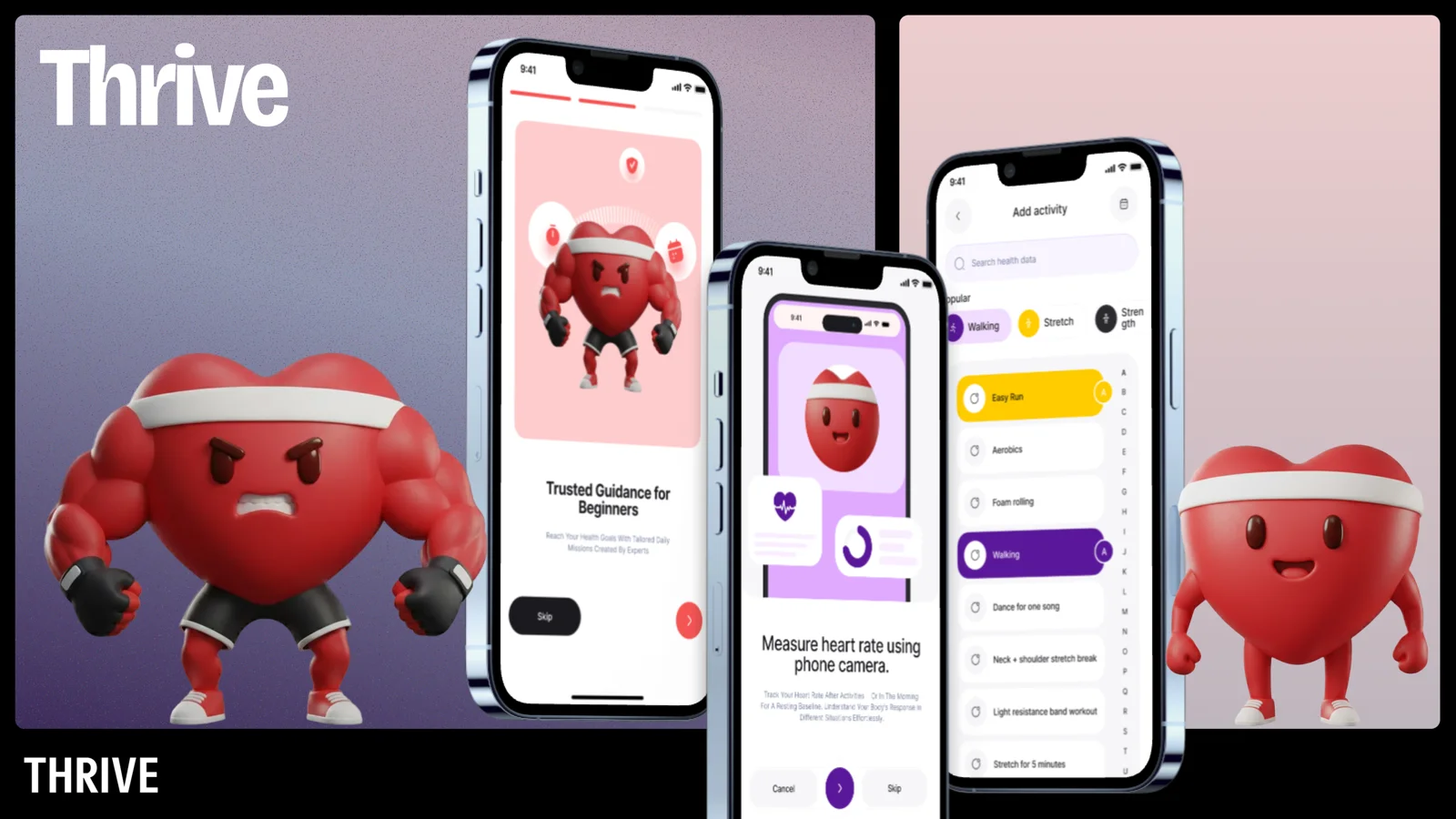
The starting question: access and engagement.
We began by asking how AI could help close gaps in health access. Fragmented information, communication barriers, and digital experiences that are difficult to maintain all shaped the brief. The design goal was a product that people could start using with low effort and return to without feeling judged.
An early direction: connected health records.
Our first concept paired a Universal Health Record with a patient-and-doctor chatbot. Patient mode guided structured symptom intake; a proposed authenticated clinician mode surfaced a concise history and referral packet. The aim was clearer handoffs across primary care and specialists.
Why we changed direction.
A shared medical-record ecosystem would require coordination among hospitals, clinics, pharmacies, and specialists, together with substantial technical and regulatory work. We narrowed the project to a wellness concept that individuals could adopt independently. The research continued to inform our focus on communication, personalization, and access.
Translating a framework into daily interactions.
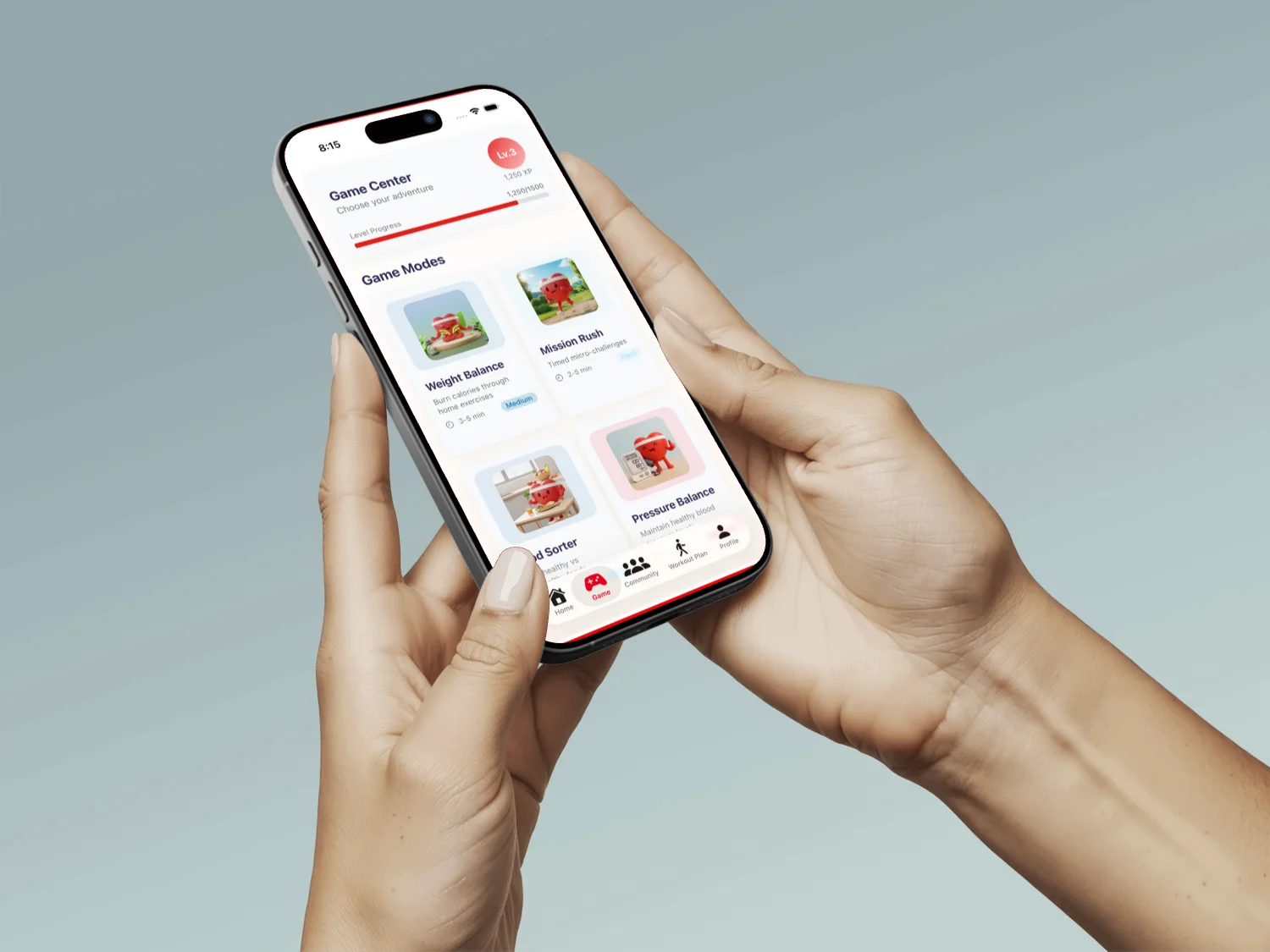
Thrive organizes its game concepts around Life’s Essential 8: eating, activity, tobacco avoidance, sleep, weight, cholesterol, blood sugar, and blood pressure. The prototype explores small missions, an AI assistant, community challenges, and rewards as ways to make the framework easier to engage with.
My contribution.
I designed key UI and UX flows, translated the eight framework areas into mini-game concepts, and supported the prototype and app build. Figma carried the interaction design, SwiftUI supported iOS prototyping, and Illustrator supplied visual assets.
What the prototype establishes.
The result is a product direction and set of interactive concepts for supportive habit-building. It brings the initial health-access research into a smaller, more approachable daily experience. Clinical effectiveness and long-term retention remain questions for future evaluation.